Analyzing the Role of Verification Processes in Shaping No-Deposit Promotion Availability for New Users in Regulated Markets
Morgan Zimmermann · Aug 7, 2026
Analyzing the Role of Verification Processes in Shaping No-Deposit Promotion Availability for New Users in Regulated Markets
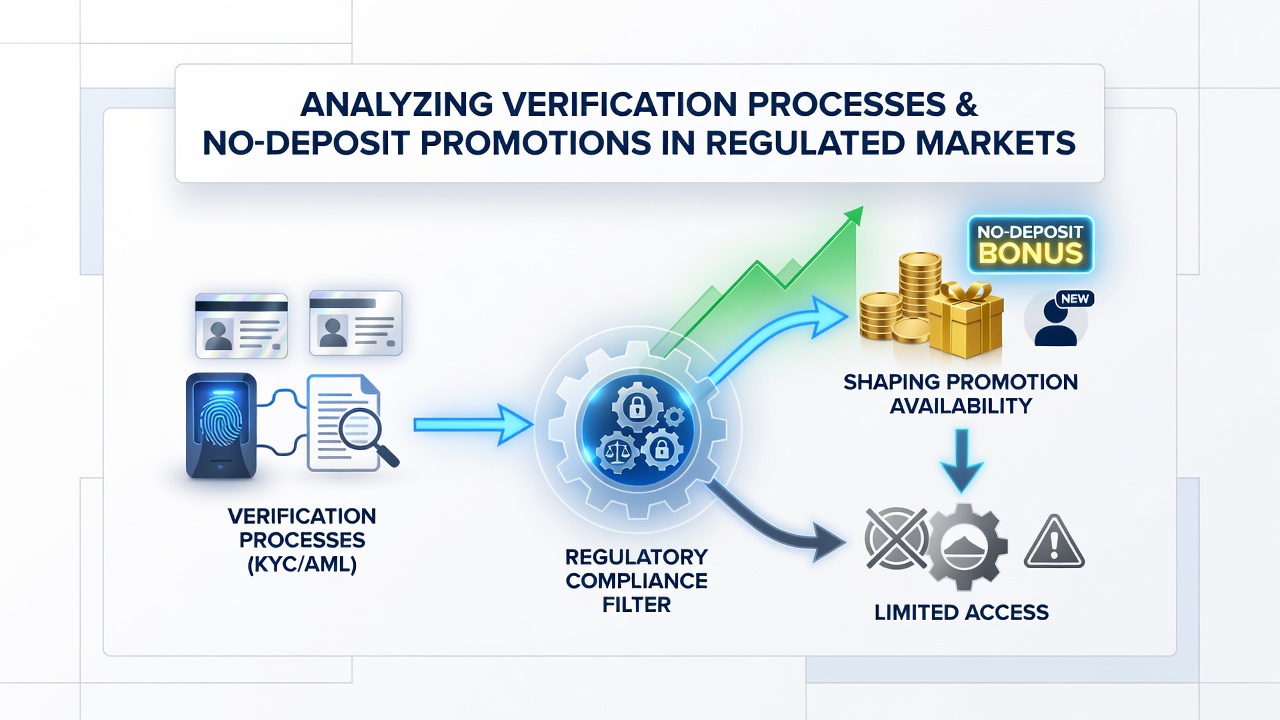
Verification processes play a central role in determining which no-deposit promotions reach new users across regulated gaming markets, and operators must balance compliance obligations with promotional strategies. Regulatory frameworks in multiple jurisdictions require identity confirmation, age checks, and address validation before players can access free credits or spins, which directly limits how quickly promotions become available. Data from the Alcohol and Gaming Commission of Ontario shows that platforms operating under provincial oversight complete initial verification steps for most new accounts within 24 to 72 hours, yet full approval for withdrawal-eligible bonuses often extends longer when additional documentation is requested.
Core Components of Verification in Regulated Environments
Regulated markets mandate several layers of checks that include government-issued identification, proof of address, and sometimes biometric confirmation or facial recognition technology. These requirements stem from anti-money laundering rules and responsible gaming standards that authorities enforce uniformly. Operators integrate automated systems with manual review stages, and the process filters out incomplete or mismatched submissions before any promotional balance is credited. In practice, many no-deposit offers activate only after the first verification tier clears, which means users who submit documents promptly gain earlier access compared with those who encounter delays from missing information or system backlogs.
August 2026 brought updated reporting standards in several Canadian provinces that require operators to log verification completion times for every promotional claim. These records help regulators track whether platforms apply consistent standards across all new accounts, and they reveal patterns in how quickly different user groups receive promotional eligibility. Similar documentation rules have appeared in Australian state licensing agreements, where gaming authorities monitor the interval between account creation and bonus activation to ensure fair treatment of applicants.
How Verification Timelines Affect Promotion Reach
Shorter verification windows expand the number of users who can claim no-deposit offers before promotional periods expire. Markets that permit instant ID scanning through approved apps report higher completion rates within the first hour of registration, whereas jurisdictions relying on manual uploads see more accounts remain in pending status for days. One analysis of North American platforms found that operators using third-party verification services reduced average processing time by 40 percent compared with in-house methods, allowing more promotions to reach active status for new users during launch windows.

Geographic restrictions also intersect with verification rules because operators must confirm that applicants reside within licensed regions. Users who register from outside approved areas receive immediate rejection notices, and their accounts never progress to the promotional stage. This geographic filtering occurs automatically once IP addresses and address documents are cross-checked, which prevents ineligible users from even seeing certain no-deposit offers listed on the platform. European regulators outside the UK have adopted comparable location verification protocols that tie directly to national licensing boundaries and tax reporting obligations.
Regional Differences in Verification Standards
European markets such as those overseen by the Malta Gaming Authority apply standardized KYC thresholds that require proof of identity before any funds, including promotional credits, can be used or withdrawn. North American state regulators impose additional responsible gaming questionnaires during the same verification sequence, which adds another checkpoint that operators must complete before releasing no-deposit rewards. These layered requirements produce measurable differences in how many new users successfully claim promotions within the first week of account creation across different jurisdictions.
Industry reports compiled by the European Gaming and Betting Association track verification-related promotion availability and show that markets with streamlined digital ID options maintain steadier claim rates throughout the year. In contrast, regions that still rely heavily on physical document uploads experience seasonal fluctuations tied to holiday mail delays and staffing shortages at verification centers. Operators respond by adjusting promotion calendars to align with average processing times reported in each market, which helps maintain consistent user engagement despite regulatory hurdles.
Conclusion
Verification processes continue to define the practical availability of no-deposit promotions for new users in every regulated market examined. Jurisdictions that invest in faster digital verification tools tend to see higher activation rates, while those maintaining stricter manual reviews record longer delays between registration and bonus eligibility. Ongoing regulatory updates, including those implemented in August 2026, reinforce the connection between compliance timelines and promotional access, and operators adjust their systems accordingly to remain competitive within the boundaries set by licensing authorities.