How Licensing Frameworks Shape Deposit Match Structures in Cross-Border Gaming Markets
Harper Perry · Jun 12, 2026
How Licensing Frameworks Shape Deposit Match Structures in Cross-Border Gaming Markets
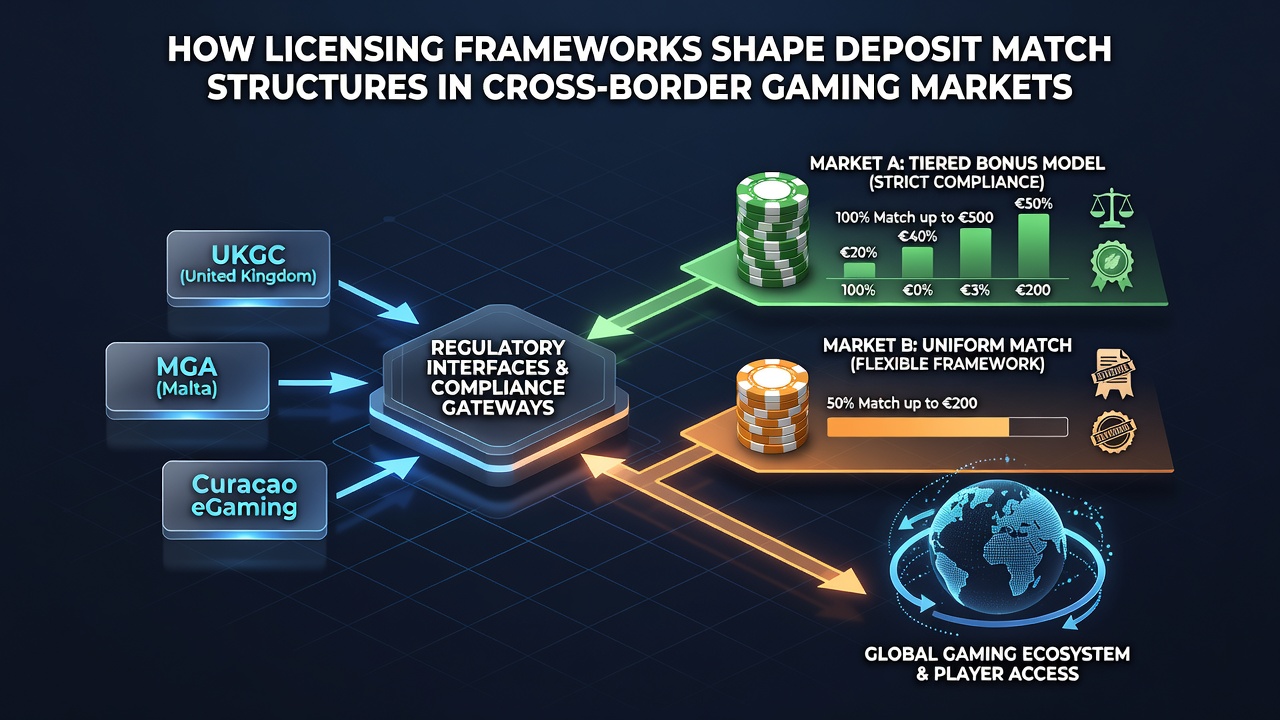
Licensing frameworks in gaming markets determine deposit match structures through rules on bonus percentages, wagering requirements, and eligibility criteria that operators must follow when serving players across borders. Regulatory bodies set these parameters to maintain compliance while operators adjust promotions to fit multiple jurisdictions simultaneously. Data from industry reports shows that deposit matches in licensed markets typically range from 50 percent to 200 percent, yet caps and playthrough conditions vary sharply based on the issuing authority.
Regional Licensing Variations and Their Direct Effects
North American frameworks illustrate clear differences in how deposit matches get structured. New Jersey regulators require operators to disclose exact match terms upfront while limiting free play conversions from bonuses to specific percentages. Operators licensed in multiple states often create tiered deposit match offers where the same player receives different percentages depending on which license governs the session. This setup emerges because each state maintains its own oversight on bonus fairness and player fund segregation.
Canadian provincial systems take a different approach with deposit matches. Authorities in Ontario and British Columbia enforce strict separation between bonus funds and real money balances, which forces operators to structure matches with distinct wallet mechanics. Cross-border operators serving both Canadian provinces and U.S. states must therefore maintain parallel systems that calculate match eligibility based on the player's registered location at the time of deposit.
European and Asia-Pacific Regulatory Influences
European licensing creates additional layers through country-specific rules on bonus transparency. Maltese authorities, for instance, require operators to publish the full calculation method for deposit matches including how wagering contributions from different game types affect release of matched funds. Operators holding licenses from multiple EU member states adjust match percentages downward in stricter jurisdictions while maintaining higher offers where rules permit greater flexibility.
Australia's state-based framework adds further complexity for cross-border operators. Victoria's gaming regulator imposes caps on deposit match values tied to average player spend metrics, whereas other states focus more on mandatory cooling-off periods after bonus claims. Operators respond by segmenting their match structures so that Australian players encounter different terms than those in licensed Asian markets where Singapore and the Philippines apply their own contribution rate tables for slots versus table games.
Cross-Border Operational Adjustments
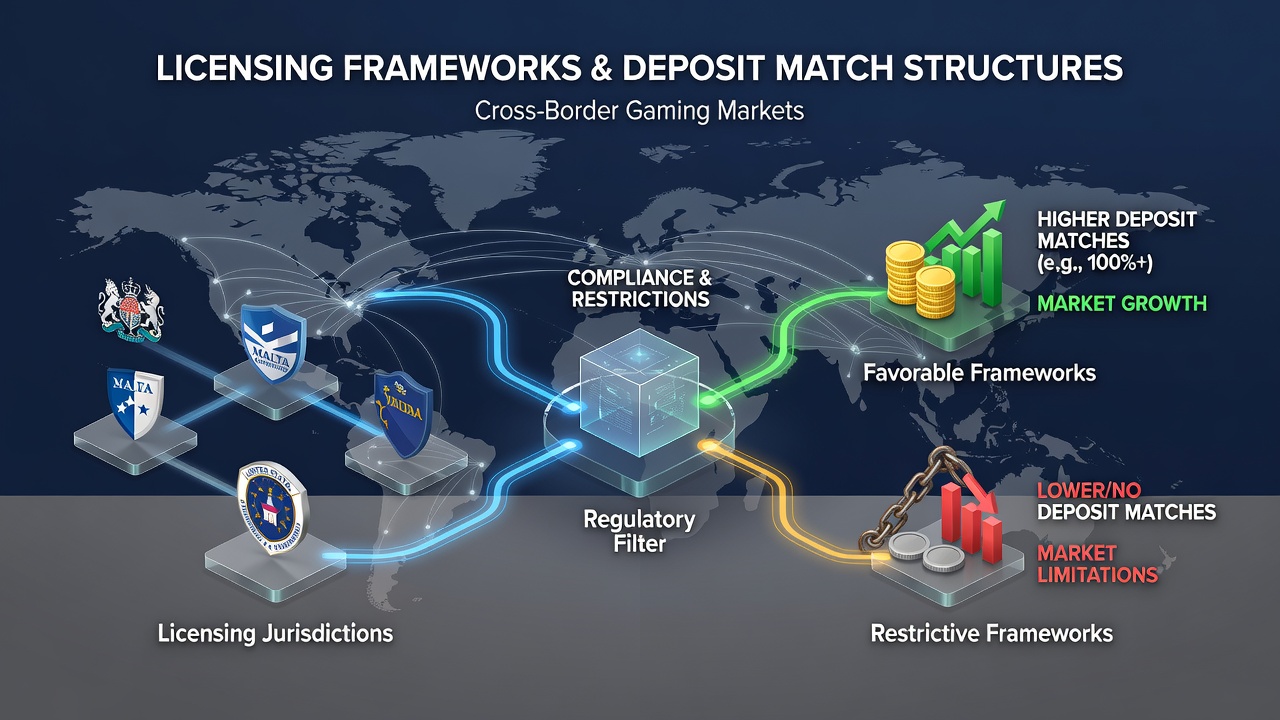
Operators managing cross-border traffic maintain separate bonus engines for each license cluster. When a player deposits from a jurisdiction with high wagering requirements, the system applies a lower match percentage to keep the effective cost within acceptable risk parameters. Research from the European Gaming and Betting Association indicates that these adjustments occur in real time through geolocation checks and account profiling that reference the player's primary license at registration.
June 2026 brought new reporting standards in several jurisdictions that require operators to file monthly breakdowns of deposit match uptake by player location. These filings reveal patterns where operators reduce match caps in markets with elevated tax rates on gaming revenue, since the combined burden of regulatory fees and bonus costs affects overall profitability. The result appears in player-facing terms where deposit matches carry jurisdiction-specific maximums and expiration timelines.
Technical Implementation Across Multiple Licenses
Software platforms used by cross-border operators incorporate license-specific rule sets that trigger different deposit match logic based on IP address, payment method origin, and player profile data. Wagering requirements often range from 20x to 50x depending on the strictest license covering that transaction. Operators document these variations in compliance logs to demonstrate adherence when regulators conduct audits across their portfolio of licenses.
Payment processor integrations also reflect licensing constraints. Certain frameworks prohibit deposit matches when funds arrive through specific methods, leading operators to disable match eligibility for those channels in affected regions. This selective application maintains compliance while preserving promotional activity where rules allow it.
Conclusion
Licensing frameworks continue to dictate the precise mechanics of deposit match structures in cross-border gaming through rules on percentages, caps, segregation, and reporting. Operators balance these requirements by deploying segmented systems that deliver compliant offers without violating any single license. According to data maintained by the New Jersey Division of Gaming Enforcement, such structured approaches have become standard for multi-jurisdictional operators. Similar patterns appear in records from the Victorian Commission for Gambling and Liquor Regulation, where regional differences drive ongoing refinements to match configurations. These regulatory influences shape how deposit matches function across borders while operators adapt their platforms to meet each framework's specifications.