Regional Disparities in Wagering Requirement Calculations for Promotional Offers
Harper Perry · Jul 15, 2026
Regional Disparities in Wagering Requirement Calculations for Promotional Offers
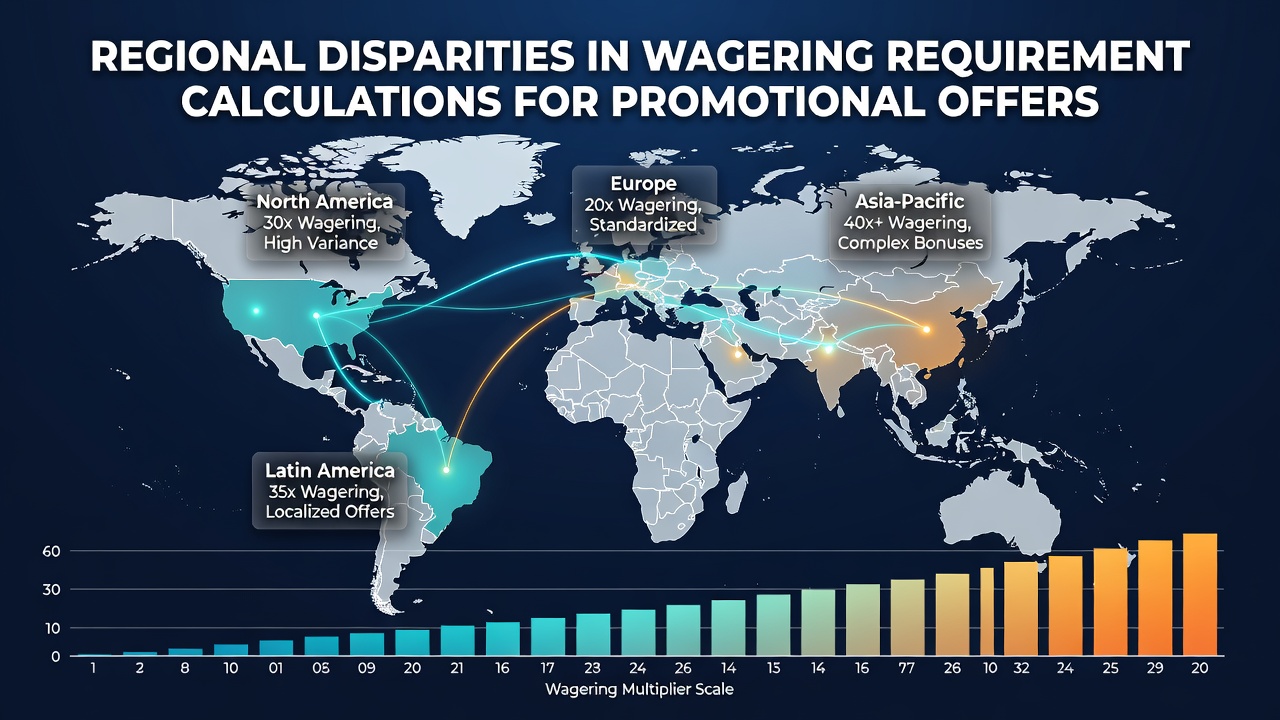
Operators across multiple jurisdictions continue to adjust how they calculate wagering requirements for promotional offers, and these adjustments create noticeable differences that affect player eligibility and bonus usability. Data from regulatory filings in July 2026 shows that North American provinces and states apply distinct formulas compared with those used in parts of Europe and Asia-Pacific markets, while contribution rates for different game types vary from one region to another.
North American Variations in Calculation Methods
Canadian provinces maintain separate frameworks that determine how much play counts toward clearing a bonus. Ontario's Alcohol and Gaming Commission of Ontario sets rules where slot games contribute 100 percent yet table games often contribute only 20 percent, and this structure differs from the approach taken by British Columbia regulators who apply a flat 50 percent contribution across most categories. Meanwhile several U.S. states such as New Jersey and Pennsylvania require operators to factor in both deposit amount and game volatility when setting the multiplier, which leads to higher effective requirements during peak promotional periods.
These differences emerge because each jurisdiction maintains its own licensing conditions, and operators must adapt their systems to satisfy local audits. Figures released in mid-2026 indicate that players in Ontario typically face an average multiplier of 30x on deposit matches while those in New Jersey encounter multipliers ranging from 25x to 40x depending on the game mix selected.
European and Asia-Pacific Approaches
European markets apply calculation models that incorporate time-based caps alongside game-type percentages. Malta's regulatory body, for instance, requires operators to exclude certain live dealer titles from contribution counts after a set number of rounds, whereas Australian state commissions in New South Wales and Victoria tie wagering progress to a percentage of theoretical loss rather than total amount wagered. This method produces lower effective requirements for high-volatility games but increases them for low-volatility options.
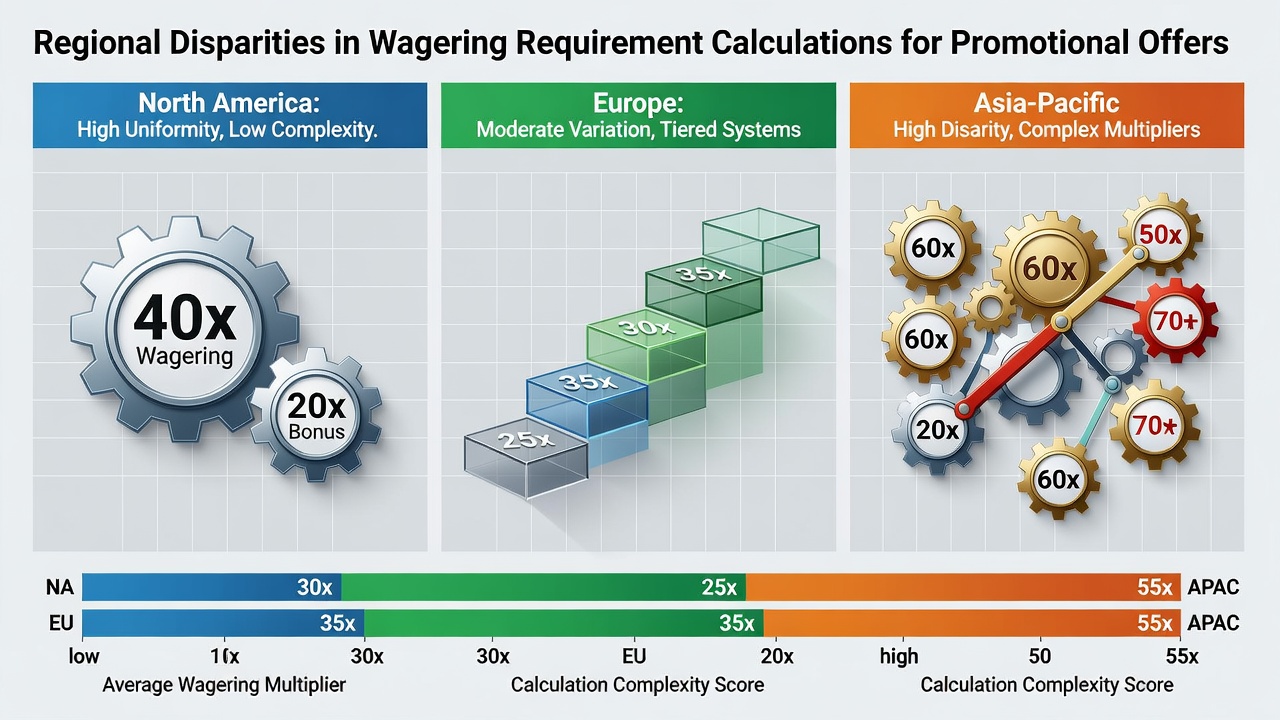
Research from the University of Nevada's gaming studies department reveals that operators serving multiple markets often implement region-specific algorithms to remain compliant, and these algorithms adjust multipliers automatically based on the player's registered location. The result is that identical promotional offers can require substantially different playthrough volumes depending on where the account is registered.
Factors Driving the Differences
Regulatory priorities shape these calculation methods because governments emphasize consumer protection at different levels. Some jurisdictions prioritize rapid bonus clearance to encourage continued play while others impose stricter multipliers to limit potential losses. Data compiled by the Canadian Gaming Association shows that provinces with higher multipliers report lower dispute rates related to bonus terms yet also record reduced repeat deposit activity compared with regions that use lower thresholds.
Operators respond to these regional rules by publishing jurisdiction-specific terms that list exact contribution percentages and excluded game types. In July 2026 several major platforms updated their promotional pages to include interactive calculators that display the remaining wagering balance based on the player's selected jurisdiction, and this transparency measure emerged after regulators in multiple markets requested clearer disclosure of calculation mechanics.
Impact on Cross-Border Operators
Companies licensed in more than one jurisdiction must maintain parallel tracking systems that apply the correct formula for each player segment. This operational requirement increases development costs yet reduces the risk of license sanctions. Industry reports note that platforms serving both Canadian and Australian markets adjust their bonus engines monthly to reflect any regulatory updates, and these adjustments often occur within days of new guidance being issued.
Players who hold accounts across different regions sometimes observe that the same deposit match clears faster in one market than another, and this observation aligns with the documented variation in multiplier structures. Observers note that these disparities remain stable over time because changing calculation methods requires fresh regulatory approval in each jurisdiction.
Conclusion
Regional disparities in wagering requirement calculations persist because licensing authorities maintain independent standards that reflect local policy goals. Operators continue to adapt their systems accordingly while regulatory bodies issue updated guidance that shapes how promotional offers function in each market. The patterns observed through July 2026 demonstrate that these differences affect both the design of bonuses and the player experience across borders.