Regional Policy Shifts and Their Impact on Layered Incentive Accessibility for Cross-Platform Sports Enthusiasts
Mara Hayes · Jul 10, 2026

Regional Policy Shifts and Their Impact on Layered Incentive Accessibility for Cross-Platform Sports Enthusiasts
Regional governments continue to adjust licensing requirements and consumer protection measures that directly shape how operators structure multi-tiered rewards for sports betting participants, and these adjustments create varying levels of access depending on user location and device preferences. Data from multiple regulatory agencies shows that changes in verification standards, cross-border data sharing rules, and deposit threshold limits have altered the availability of stacked promotions such as initial match offers combined with ongoing loyalty multipliers and platform-specific reload sequences.
North American Regulatory Adjustments
State-level frameworks in the United States have introduced new residency verification protocols that require operators to confirm user locations more frequently before releasing layered incentives, and this requirement affects mobile and desktop users differently because geolocation services on phones often integrate with carrier data while desktop sessions rely on IP checks alone. Figures released by the New Jersey Division of Gaming Enforcement indicate that compliance updates implemented in early 2026 led to temporary holds on bonus releases for approximately 12 percent of cross-platform accounts during peak betting periods. Observers note that similar verification layers have appeared in Michigan and Pennsylvania, where operators must now segment incentive pools according to whether participants access services through native applications or browser-based interfaces.
Canadian provinces have moved toward unified account management systems that link activity across devices, and the Alcohol and Gaming Commission of Ontario reported in July 2026 that integration of these systems reduced duplicate bonus claims by 27 percent while maintaining separate reward tracks for sports enthusiasts who switch between tablet and desktop sessions. Those who track incentive structures observe that the shift forces platforms to recalibrate eligibility windows because a single verified account now carries cumulative data from multiple access points rather than treating each device session independently.
European and Australian Developments
Across several European jurisdictions, updated rules on player fund segregation have required operators to separate bonus balances from deposit funds in real time, and this separation influences how layered rewards accumulate when users move between mobile and web platforms during live events. Research compiled by the European Gaming and Betting Association shows that jurisdictions adopting these rules experienced a measurable decline in the stacking of time-limited promotions because operators must now process each layer through additional compliance checkpoints. Australian state authorities have introduced spending limit synchronization across devices, and data shared by the Queensland Office of Liquor and Gaming Regulation demonstrates that such synchronization caps the total value of accessible incentives for frequent cross-platform bettors regardless of how many separate applications they use.
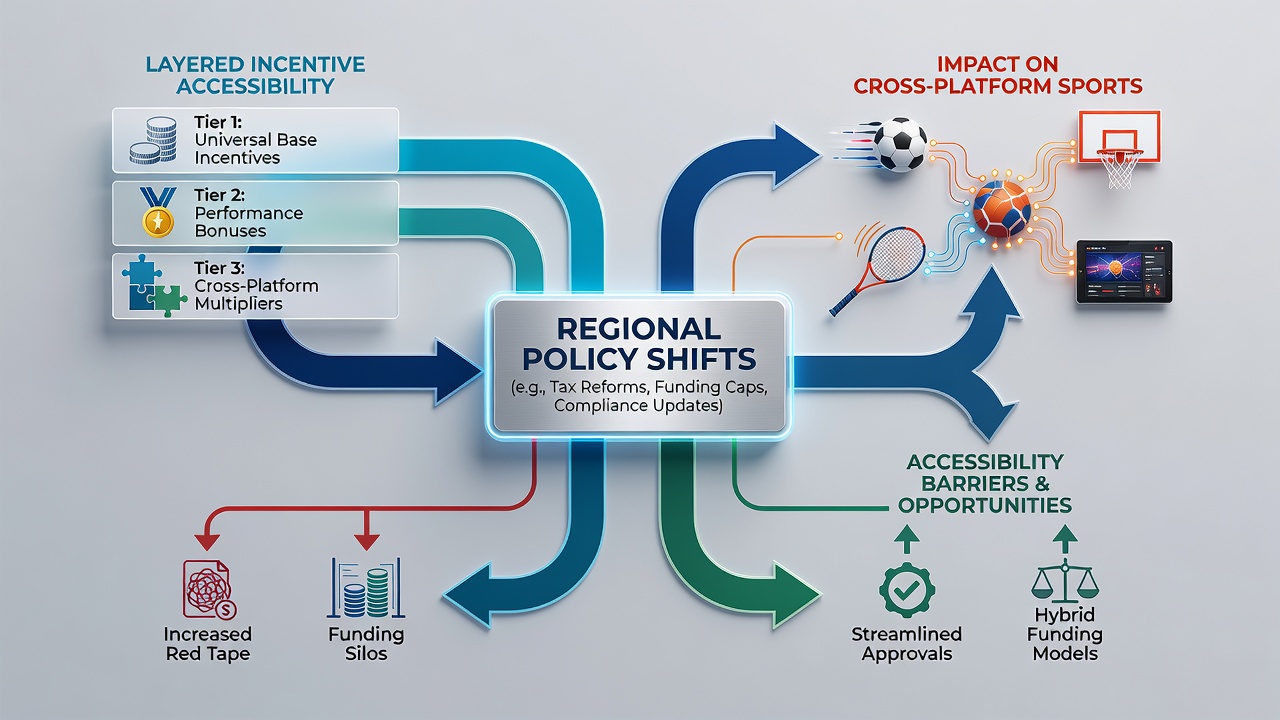
These synchronized limits create situations where a participant who begins a deposit match on a mobile app and continues activity on a desktop client encounters an earlier cap than previously existed under device-specific tracking. Industry reports indicate that operators have responded by offering jurisdiction-specific incentive menus that adjust automatically based on the primary regulatory framework attached to each verified account.
Effects on Incentive Layering Mechanics
Layered incentive systems typically combine entry-level deposit matches, mid-tier reload sequences, and top-tier loyalty multipliers, yet regional policy updates have forced operators to embed location-based eligibility flags into each layer. Studies from the University of Nevada Gaming Research Center reveal that platforms operating in multiple regions now maintain separate bonus engines because a single unified system risks violating the strictest applicable rules when users cross jurisdictional boundaries. Cross-platform sports enthusiasts therefore encounter different progression speeds through reward tiers depending on whether their primary access device registers under a more permissive or restrictive framework.
Payment method restrictions tied to new anti-money laundering directives further complicate access because certain e-wallets approved in one region trigger automatic exclusion from loyalty accrual in another, and this exclusion applies uniformly across mobile and desktop logins once the account links the payment source. Operators have introduced region-aware dashboards that display only those layers currently available to each user, and this display method reduces confusion while ensuring compliance with varying policy environments.
Conclusion
Regional policy shifts continue to reshape how layered incentives reach cross-platform sports enthusiasts through stricter verification, synchronized limits, and device-aware eligibility rules, and regulatory data from multiple agencies shows these changes have standardized reporting while segmenting reward availability. Operators respond with adaptive systems that maintain separate tracks for different jurisdictions, allowing participants to access only those layers permitted under their verified location and chosen access method. The result is a more fragmented but compliant landscape where incentive accessibility depends on the intersection of geography, device, and regulatory requirements rather than uniform platform-wide offerings.