Regulatory Shifts Reshaping Wagering Thresholds for Repeat Deposit Incentives in Cross-Jurisdictional Sports Platforms
Quinn Brooks · Jul 29, 2026

Regulatory Shifts Reshaping Wagering Thresholds for Repeat Deposit Incentives in Cross-Jurisdictional Sports Platforms
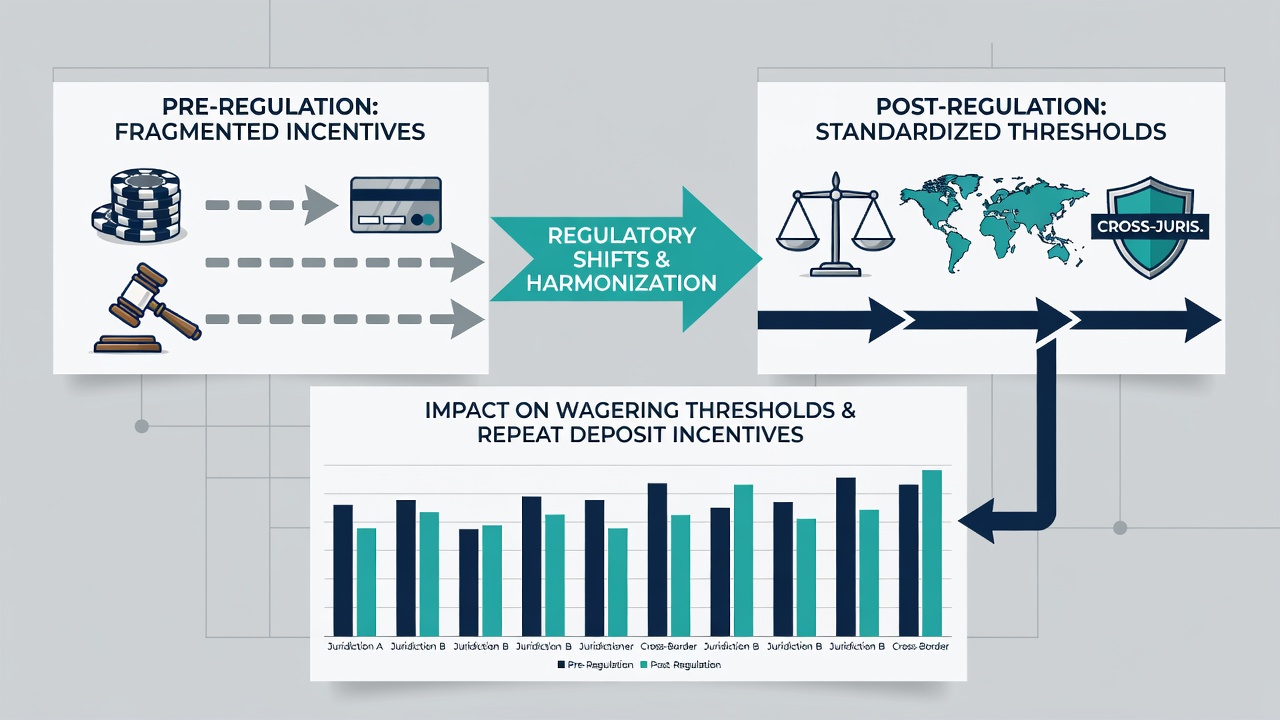
Regulatory adjustments that took effect across several regions in July 2026 have begun to modify the way wagering thresholds calculate for repeat deposit incentives on sports platforms that serve users in more than one jurisdiction, and these updates require operators to recalibrate their bonus structures accordingly. Data from multiple licensing bodies indicates that thresholds now incorporate jurisdiction-specific playthrough multipliers while still accounting for the cross-border nature of user accounts, which creates layered compliance obligations for platforms operating under several regulatory frameworks at once.
Key Adjustments in Threshold Calculations
Authorities in Ontario and several Australian states introduced rules that tie repeat deposit matches to a minimum number of qualifying bets placed within defined timeframes, yet the new formulas also factor in the user's primary jurisdiction to prevent double-counting of wagers across borders. Operators must now apply separate tracking systems for each regulatory zone, and this requirement stems from updated licensing conditions that emphasize transparent reporting of incentive-related activity. Figures released by iGaming Ontario reveal a 12 percent increase in compliance filings related to bonus recalibrations during the first month after the July changes, while Australian state regulators reported similar upticks in operator submissions.
Cross-Border Platform Responses
Platforms that accept users from both North American and European markets have adjusted their repeat deposit offers by segmenting user cohorts based on licensing origin, which allows them to meet varying threshold standards without violating any single set of rules. One operator that serves clients in Ontario, New Jersey, and several EU member states implemented automated software to assign jurisdiction tags at account creation, and this system automatically applies the strictest applicable wagering multiplier to each repeat deposit. Research from the International Center for Gaming Regulation shows that such segmentation reduces the risk of regulatory overlap while maintaining incentive appeal for users who deposit frequently.
Those who have studied these platforms note that the July 2026 updates also mandate clearer disclosure of how thresholds interact with currency conversions, since many cross-jurisdictional users fund accounts in multiple denominations. Operators therefore publish updated terms that list exact playthrough requirements per jurisdiction, and they must refresh these disclosures whenever a regulatory body alters its formula.
Enforcement Trends and Reporting Requirements
Enforcement agencies have stepped up audits that focus specifically on repeat deposit incentives, and July 2026 saw the launch of a shared data portal between Canadian provincial regulators and Australian state bodies to flag inconsistencies in threshold application. This portal enables real-time comparison of reported wagering volumes against claimed bonus redemptions, which helps authorities identify platforms that apply outdated multipliers. According to reports from the Malta Gaming Authority, several operators received formal notices requesting revised compliance plans within thirty days of the portal's activation.
Industry associations such as the European Gaming and Betting Association have published guidance documents that outline best practices for aligning internal systems with the new multi-jurisdictional thresholds, and these documents emphasize the need for granular user data segmentation. Observers note that platforms adopting these practices early recorded fewer audit queries during the summer review period, while those still using legacy single-threshold models faced additional documentation requests.
Future Outlook for Operators and Users
Regulatory bodies continue to signal that further refinements to wagering threshold formulas will occur before the end of 2026, particularly as more jurisdictions finalize their positions on cross-border data sharing. Operators therefore maintain flexible backend systems that can accommodate multiplier changes without disrupting active user incentives, and many have begun testing threshold scenarios based on draft regulations circulating among licensing authorities. Data shared by the National Council on Problem Gambling indicates that transparent threshold communication correlates with higher user retention rates across regulated markets, though the exact mechanisms behind this pattern remain under study by academic researchers.
Conclusion
The regulatory environment surrounding repeat deposit incentives on cross-jurisdictional sports platforms continues to evolve through coordinated updates that emphasize precise threshold application and consistent reporting. Platforms that invest in adaptive compliance infrastructure position themselves to handle ongoing adjustments, while users encounter clearer terms that reflect the jurisdiction-specific rules now in force. Continued monitoring of enforcement actions and data-sharing initiatives will determine how these shifts settle into established practice across the sector.